
Ballistics, a key science in the field of defense and security, encompasses the study of the movement, behavior, and effects of projectiles. The analysis of ballistic performance is critically important, ranging from the optimization of handguns for law enforcement to the fine-tuning of precision rifles, essential for snipers. This technical evaluation allows for understanding the factors affecting the accuracy and range of shots, such as internal, external, and terminal ballistics, influenced by elements like projectile design, materials used, weapon mechanics, and environmental conditions.
Evaluation of Ballistic Performance: From Handgun to Sniper Rifle
The analysis of ballistic performance spans the complete spectrum of firearms, ranging from handguns to formidable precision rifles. In this context, the barrel length affects the ejection speed and stabilization of the projectile, two crucial parameters for shot accuracy. For a revolver, for example, an increase in barrel length can mean better recoil control and increased accuracy. At the opposite end of the spectrum, the speed of a rifle bullet, thanks to the advanced design of sniper rifles, reaches thresholds that allow not only for increased accuracy at long distances but also for optimal management of terminal ballistics.
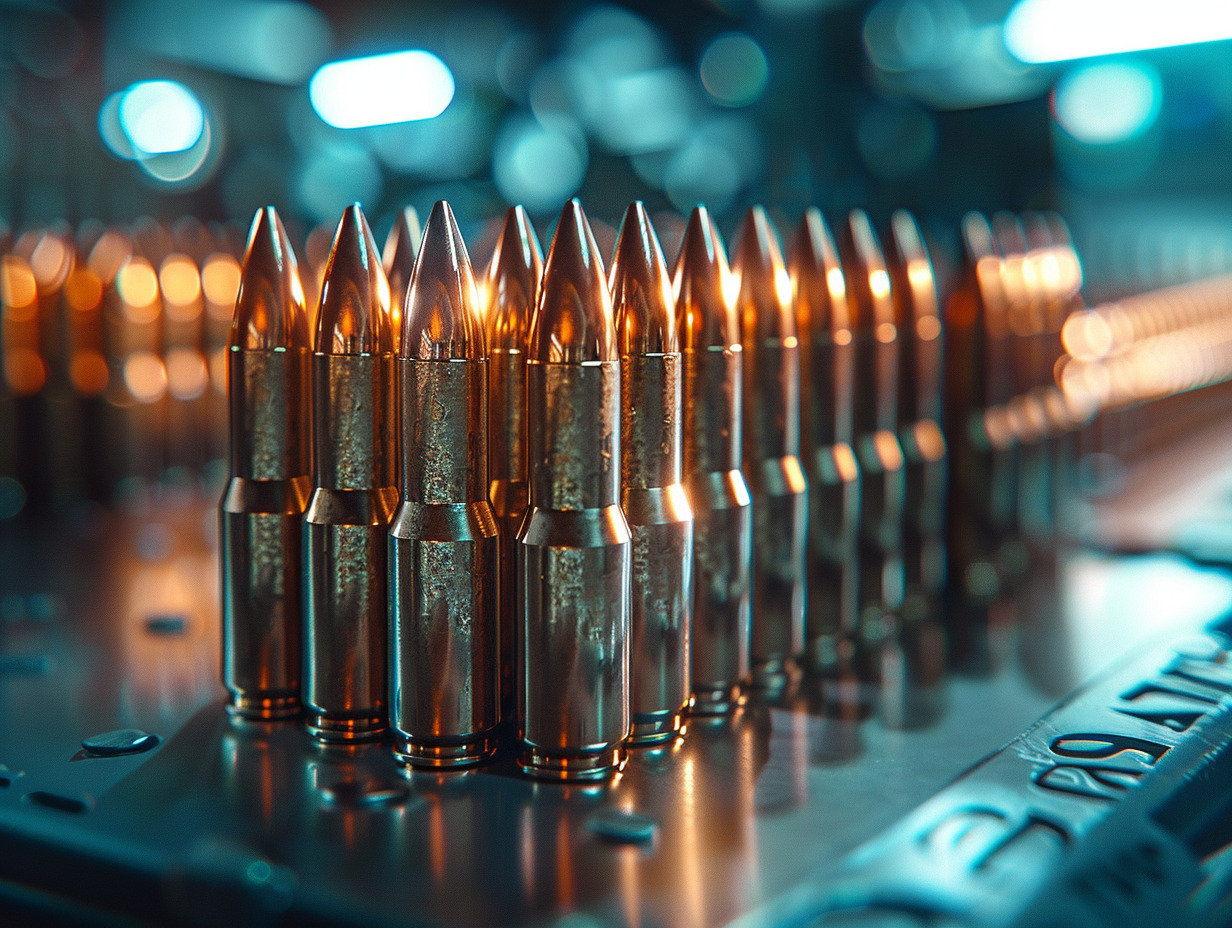
The ballistics of a bullet, whether fired from a handgun or a rifle, intrinsically depends on its physical characteristics such as caliber, shape, weight, and composition. Ammunition varies significantly; from .22 LR cartridges, favored for sport shooting due to their low recoil, to powerful .45 ACP rounds, chosen for their stopping power in defense situations. The performance of a revolver thus depends on the synergy between the mechanical action of the weapon and the ammunition used, while for precision rifles, the major concern lies in the ability to maintain the projectile’s trajectory over extended distances.
Recoil management and shooting experience are major skills for law enforcement, who must rely on the reliability and consistency of the weapons they employ. France, with the standards of the CIP (Permanent International Commission for the Proof of Small Arms), ensures the harmonization of standards, thereby ensuring that the ballistic performance of weapons meets the rigorous demands of operational situations. Brands such as Smith & Wesson and Springfield are at the forefront, offering handguns and rifles designed to maximize accuracy, control, and efficiency.
Tactical and Operational Implications of Ballistic Characteristics
In the realm of security and defense, the ballistic characteristics of firearms and ammunition determine not only operational strategy but also the design of protective equipment. Bulletproof vests, for example, owe their effectiveness to a deep understanding of the terminal ballistic effect. These security devices are designed to counter specific threats identified through the analysis of penetration and deformation of projectiles upon impact.
Ballistics experts within the forensic police play a key role in criminal investigations. They use sophisticated identification methods to link marks on projectiles and casings to specific weapons, thereby creating a connection between the weapon and the crime scene. This discipline, combining scientific rigor and fieldwork, provides major evidence in the judicial process, often allowing for the resolution of complex cases.
Consider the practical implications of these expertise: firearms legislation, police officer training, and the design of defensive arsenals are directly influenced. Legislation, particularly in Paris, relies on ballistic data to establish strict standards regarding the possession, transport, and use of firearms. Standardization, ensured by bodies such as the Institute of Forensic Science in Lausanne, led by Pierre Margot, sets the benchmark for weapon management.
The management of recoil and shooting accuracy directly influence the intervention tactics of law enforcement. In training, these elements are scrutinized to optimize the responsiveness and effectiveness of agents in operational stress situations. The accuracy of handguns and precision rifles is thus tested in various scenarios, replicating field conditions to ensure an appropriate and controlled response during real confrontations.