Choosing window colors in Brittany is not about randomly flipping through a color chart. The maritime climate, sea spray, color charts imposed by coastal municipalities, and the nature of facade materials significantly narrow down the range of relevant shades. This article compares color options based on the material, their durability against coastal conditions, and the regulatory constraints specific to the region.
Textured finishes and resistance to sea spray: a criterion before color
Competitors rarely address the issue of surface texture, while it directly affects the visible aging of a window by the sea. Since 2022-2023, PVC and aluminum profile extruders like Deceuninck or Profils Systèmes have been offering specific sanded or frosted finishes for coastal areas. Their role: to mask salt deposits and micro-scratches caused by sand and sea spray.
On a classic smooth joinery, a dark anthracite gray reveals every trace of salt after a few months. The same shade in a textured finish remains homogeneous for much longer. This parameter is as important as the choice of color itself, and feedback from Breton carpenters confirms that the demand for these finishes is clearly increasing in coastal areas.
To explore the ideal colors for Breton windows, surface texture should be among the top selection criteria, even before color.
Window color PVC, aluminum, and wood: comparison of options in Brittany
The material determines both the range of available colors and the durability of the shade. The table below summarizes the main characteristics for the three common materials in Brittany.
| Criterion | PVC | Aluminum | Wood |
|---|---|---|---|
| Color range | Wide (RAL color chart), including wood imitations | Very wide (lacquered, complete RAL color chart) | Unlimited (paint or stain) |
| Bi-coloration (exterior/interior) | Yes, common | Yes, native | Possible but more expensive |
| UV and sea spray resistance | Good with co-extrusion or lamination | Excellent (powder coating) | Variable, regular maintenance required |
| Textured finishes for coastal areas | Available from some extruders | Available (sanded, frosted) | Not applicable |
| Color maintenance | Low | Very low | High (repainting or restaining) |
Aluminum dominates in terms of color retention thanks to powder coating, a process that bakes the paint to withstand saline aggression. PVC is catching up with lamination techniques and recent textured finishes. Wood offers total freedom of shade but requires regular maintenance, making it less suitable for facades directly exposed to sea winds.
Bi-colored windows in coastal areas: the PLU solution
Bi-coloration is the most common technical response to the conflicting constraints between personal taste and local regulations. The principle: an exterior shade compliant with the PLU or municipal color chart, and a free interior shade.
Since 2023, manufacturers active in Brittany like K·Line and Atlantem have observed a rise in combinations of anthracite or sanded gray exterior, white or linen interior. This configuration meets street-side requirements while preserving interior brightness.
Municipal color charts in Brittany
The Architects of Buildings of France in Brittany are increasingly guiding projects towards dull grays (stone gray, blue gray) rather than pure white or very dark anthracite gray. The goal: to limit overly stark contrasts with the traditional light coatings of Breton facades.
This trend is explicitly reflected in several recently updated local charters:
- The color and materials charter of Saint-Malo, updated in 2022, favors shades in harmony with local granite and stone coatings.
- The facade color charter of Vannes, version 2023, frames the allowed contrasts between joinery and walls.
- Other coastal municipalities in Brittany adopt similar orientations, often with the support of the ABF, which recommend discreet tones.
Before placing any order, checking the PLU of one’s municipality and, in protected areas, consulting the urban planning service remains the first step. An anthracite gray RAL 7016 window, very popular in the rest of France, may be refused in certain heritage areas in Brittany.
Window color and Breton facade style: successful associations
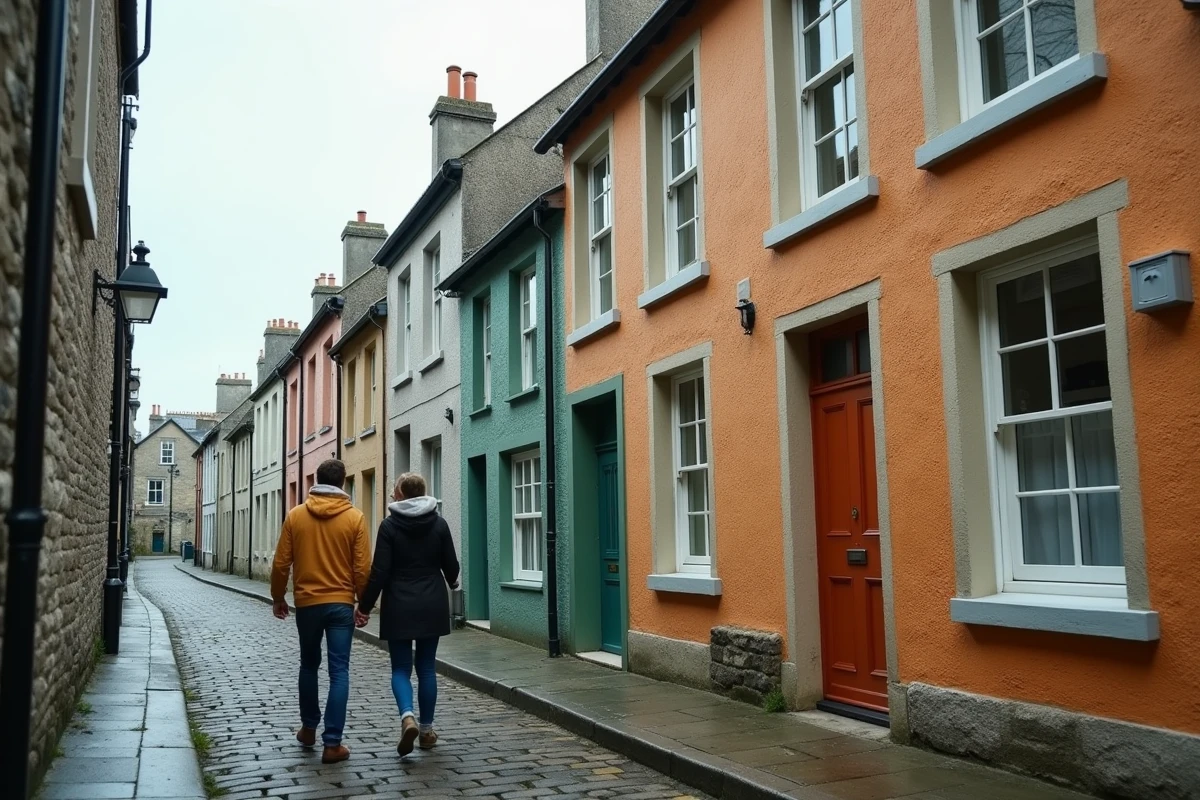
The color of a window is not chosen in isolation. It interacts with the plaster, stone, shutters, and roofing. In Brittany, three facade configurations dominate, and each calls for different shades.
Facade with exposed granite
The typical gray-blue granite of the northern coastline absorbs light. Too light joinery (pure white) creates a harsh contrast. Stone grays or sand shades integrate better. A medium blue-gray (like RAL 7001 or 7040) extends the tone of the granite without erasing the joinery in the facade.
Facade with light plaster
White or cream plasters, common in Morbihan and southern Brittany, can handle more contrast. Anthracite gray works here, provided the PLU allows it. The combination of light plaster and anthracite joinery with matching shutters produces a clean contemporary look.
Timber-framed house or renovated longère
On longères and timber-framed houses, wood imitation shades (golden oak, natural oak) or discreet greens remain the most coherent. Off-white or linen replaces pure white, which appears too new on old buildings.
Window color simulator: useful but limited
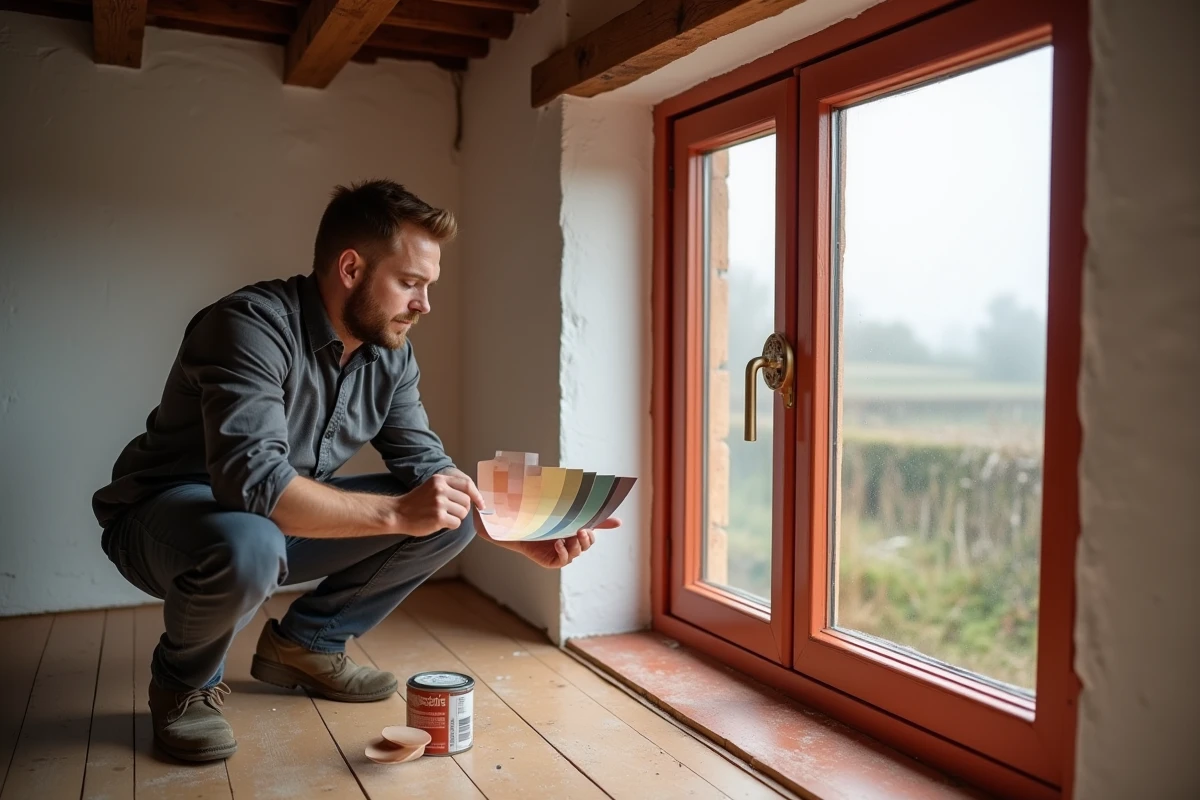
Several manufacturers offer online simulators to visualize a shade on a photo of a facade. These tools help eliminate inconsistent associations, but they do not accurately reproduce the actual rendering. Breton light, often diffuse and changeable, alters the perception of shades from hour to hour.
Requesting a physical sample of the profile in the desired shade, then observing it at different times of the day against one’s own facade, remains the most reliable method. Natural Breton light softens warm shades and enhances grays, an effect that no screen reproduces correctly.
The choice of a window color in Brittany is influenced by three overlapping filters: municipal regulations, the behavior of the material against the maritime climate, and the visual interaction with the existing facade. Among these three filters, it is often the PLU that makes the first decision, well before personal preferences.