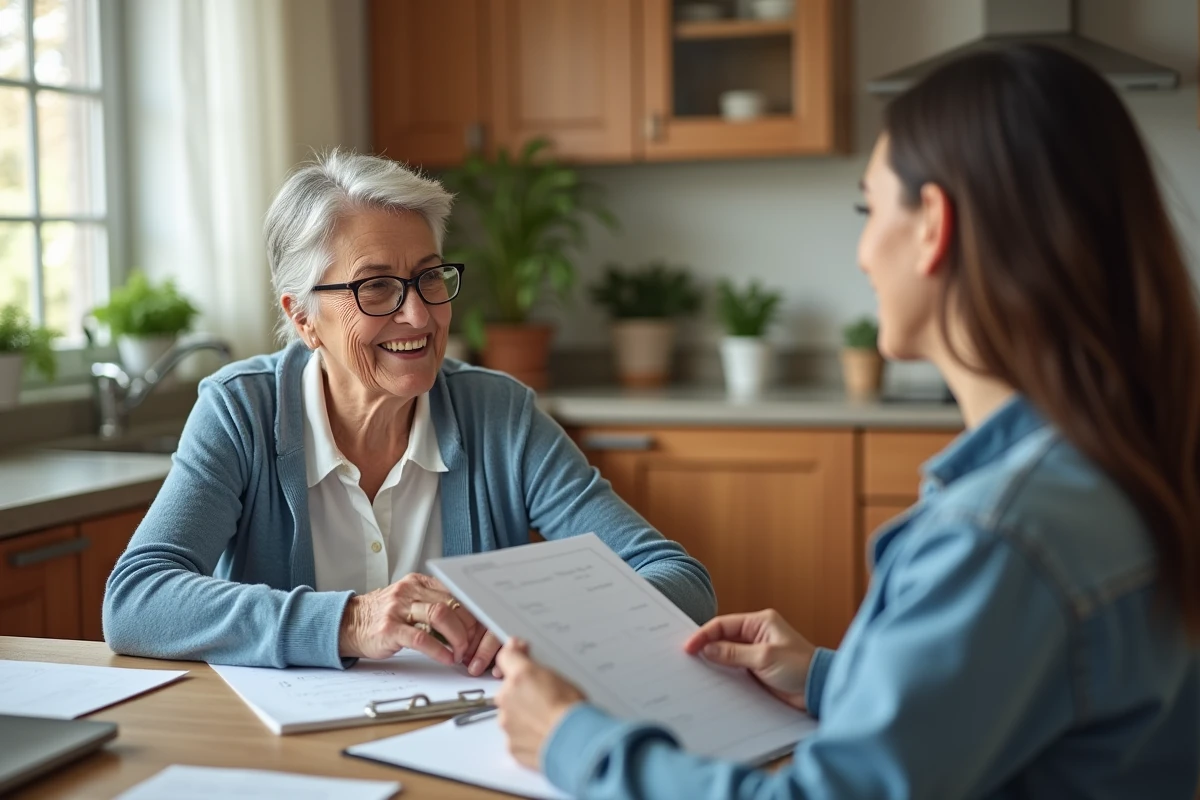
The landscape of services for seniors has become so fragmented that the actual offerings are nearly unreadable. Between generalist platforms, public systems, and private players in the Silver economy, identifying the right contact for each need requires mastering frameworks that most consumer guides do not address.
GIR and APA Grid: the technical filter that conditions all other senior services
Any request for structuring services (funded home assistance, access to independent living facilities, entry into nursing homes) goes through the evaluation of loss of autonomy via the AGGIR grid. The classification into GIR 1 to 6 determines eligibility for the Personalized Autonomy Allowance and, by extension, the volume of fundable assistance hours.
We observe that many families seek home services even before having assessed their loved one’s GIR. The result: an unexpected out-of-pocket expense, undersized services, or conversely, additional costs for interventions not covered by the APA.
Local entry points (CCAS, CLIC, departmental social services) are now identified by public authorities as comparison counters between different living solutions, rather than mere financial aid counters. To map all available systems according to your situation, the services of Magazine Seniors structure information by concrete need rather than by administrative category.
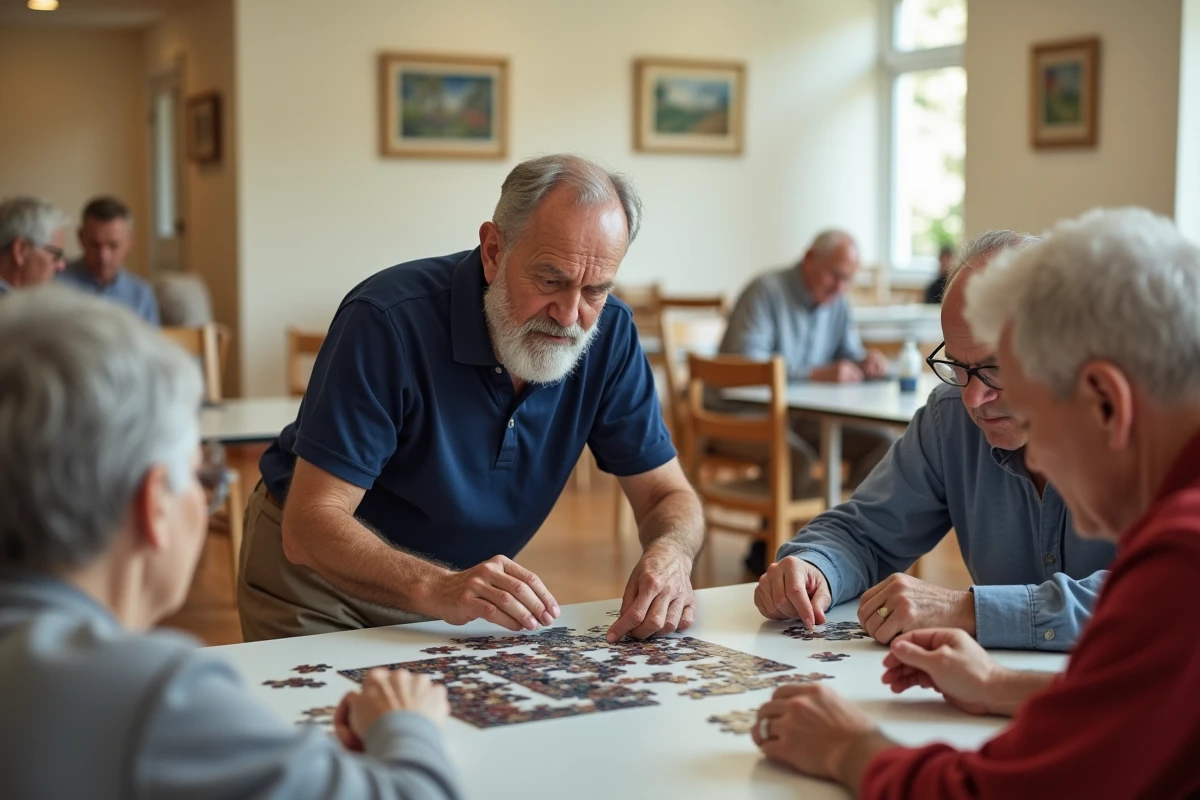
Senior service residences: a third way between home and nursing homes
The market for senior service residences positions itself as a distinct alternative to traditional home care and medicalized accommodation. Their model is based on private housing coupled with à la carte services: dining, activities, security, concierge.
The target is not high dependency. These residences primarily address the social isolation of still autonomous individuals (mainly GIR 5-6). The positioning is that of maintained social life, not care.
Criteria for selecting a service residence
- The mode of occupancy (purchase or rental) affects the applicable taxation and the reversibility of the choice if health status changes
- The base of services included in the charges varies significantly from one operator to another, with some charging for dining separately while others include it in the monthly package
- The proximity of a hospital or a network of liberal nursing care remains an underestimated criterion during selection
The government roadmap on shared housing for seniors, published in 2026, reinforces this segment. At the same time, nursing homes are evolving towards the designation “Maisons France Autonomie”, with the planned opening of an additional 48,000 places dedicated to high dependency. This redistribution of roles clarifies the positioning of each type of structure.
Home assistance and health activities: linking daily service and prevention
Home assistance is not limited to help with daily tasks. Home helpers also intervene in relational and social aspects: outings, recreational activities, administrative assistance. This aspect of the service is rarely valued in APA aid plans, even though it directly contributes to maintaining autonomy.
A well-calibrated aid plan combines hours of physical intervention and time for social activities. We recommend explicitly negotiating this division during the plan’s development with the department’s medico-social team.
Health and prevention workshops: beyond well-being
Prevention workshops (adapted physical activity, memory workshops, nutrition) are offered by pension funds, mutual insurance companies, and some local authorities. Access often depends on the affiliation scheme.
- Pension funds finance targeted prevention programs (balance, reading, cognitive stimulation) accessible by registration, often free for members
- Senior mutuals offer prevention packages that cover all or part of health workshops, including outside the partner network
- CCAS organizes collective activities (gentle gymnastics, cultural outings) whose access is conditioned on residency in the municipality, not on the level of dependency

The role of caregivers and respite solutions: an underfunded angle
Family caregivers provide the majority of daily support for seniors experiencing loss of autonomy. The systems designed for them (right to respite, support platforms, training) remain underutilized due to lack of visibility.
The right to respite, integrated into the APA aid plan, allows for financing temporary accommodation or increased home assistance to relieve the caregiver. In practice, few families know that this right can be activated without waiting for exhaustion.
Concrete solutions for caregivers
Respite and support platforms (PFR) offer individual consultations, support groups, and referrals to suitable services. Their territorial coverage remains uneven, but CLIC and CCAS can direct to the nearest platform.
Linking services dedicated to seniors with support for caregivers forms a coherent whole. An aid plan that ignores the caregiver ultimately undermines the home support it is supposed to guarantee. The senior-caregiver duo constitutes the basic unit of any sustainable support, and every system requested should integrate this dual dimension from the initial assessment.