Pump failure in the middle of July, technical room under construction, or just an above-ground pool without a filtration system: sometimes we find ourselves needing to keep pool water clean without any circulation system for several days. This situation is more common than one might think, and the window before the water turns is short, especially in hot weather.
Chlorine and active oxygen without circulation: what really works over a week
Without a pump, the disinfectant does not distribute itself in the pool. You can pour in all the shock chlorine you want: if it remains concentrated in one spot, part of the water escapes treatment and algae settle in within a few days.
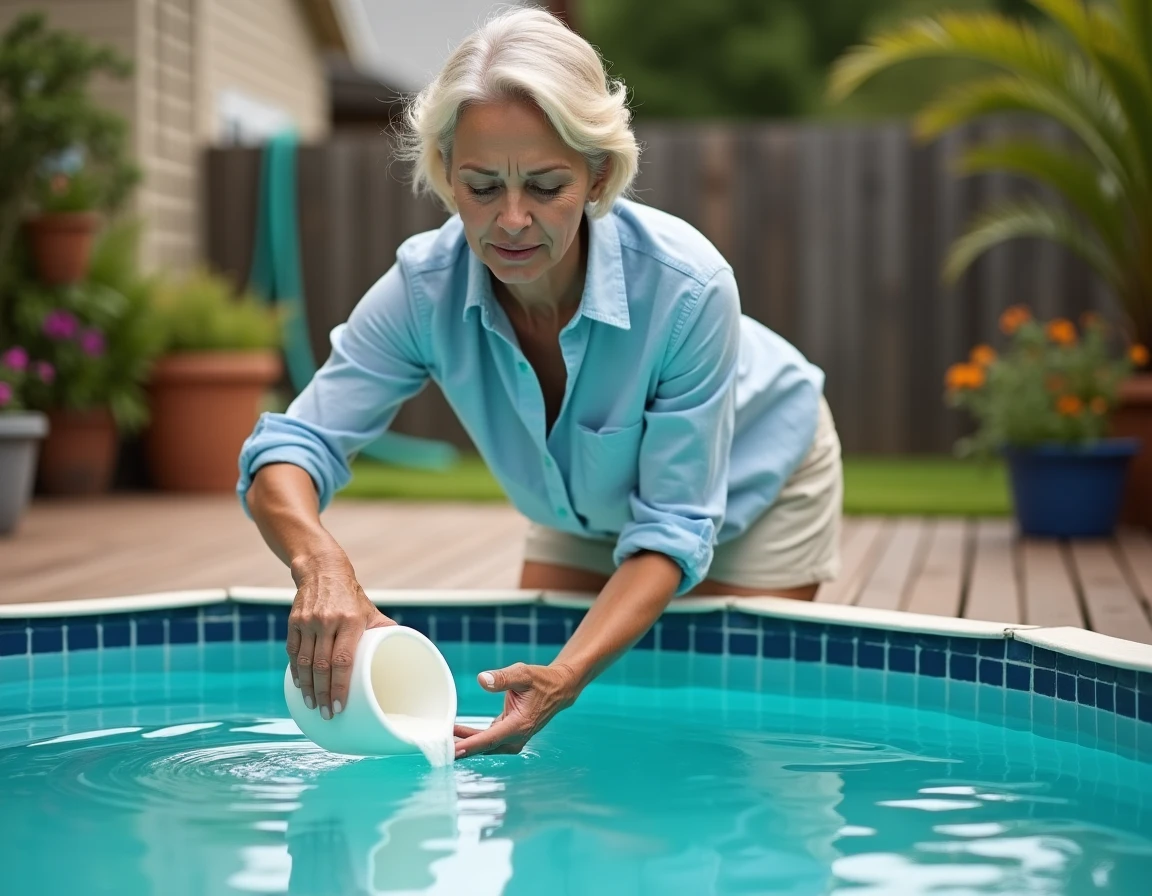
The most reliable solution to cover a week involves combining two actions. First, an initial shock treatment with unstabilized chlorine (calcium hypochlorite), diluted in a bucket of warm water and then poured in several spots around the pool. Next, a floating dispenser loaded with slow-release chlorine tablets, which gradually releases disinfectant.
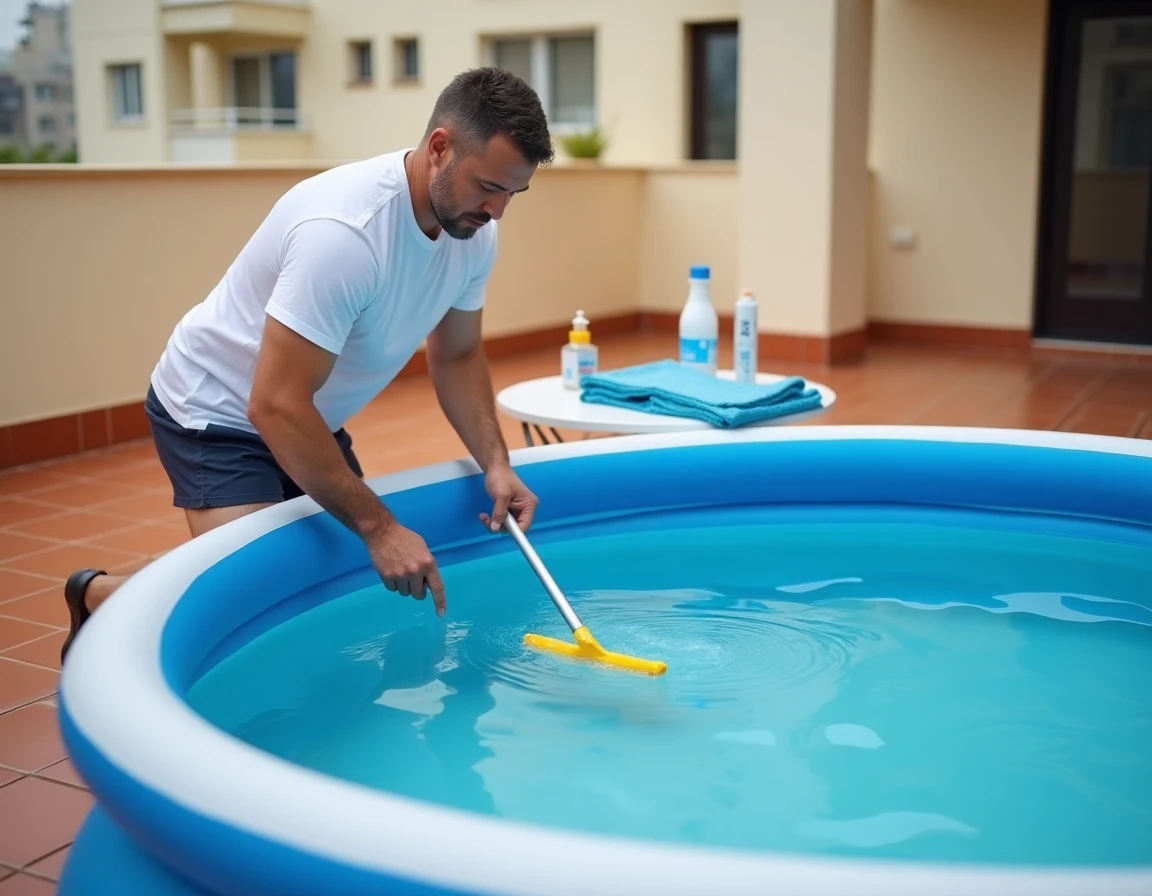
We complete this with a step that tends to be neglected: manually stirring the water at least once a day, using a pool brush or even a simple oar. This stirring, even if rough, redistributes the chlorine and prevents thermal stratification that encourages bacterial proliferation on the surface.
Since the 2023-2024 seasons, long-lasting treatment gels have appeared on the shelves of garden centers. These products slowly release disinfectant and anti-algae for one to two weeks without intervention. They are designed for small pools or temporary situations without filtration.
It is still not widely discussed in classic guides, but field feedback is encouraging for the treatment of pool water without filtration for 1 week in a simple domestic context.
Removing debris before it decomposes: the daily constraint
A filtration system continuously catches leaves, insects, and fine particles. Without it, everything that falls into the water stays there and decomposes, feeding algae and consuming available chlorine. Over a week without filtration, daily manual cleaning becomes the first line of defense.
Specifically, this means using a surface skimmer morning and evening, and a manual bottom vacuum (like a Venturi, connected to a garden hose) at least every two days. Organic debris that stagnates at the bottom releases phosphates, a natural fertilizer for microscopic algae.
A cover or solar blanket placed at night and during non-swimming hours significantly reduces the influx of external debris. It also limits evaporation and maintains a more stable temperature, which slows down the consumption of disinfectant.
Daily maintenance actions without filtration
- Use the surface skimmer twice a day to remove leaves, insects, and pollen before they sink to the bottom
- Brush the walls and waterline every two days to prevent biofilm deposits, which are a substrate for green algae development
- Vacuum the bottom manually at least three times during the week, disposing of dirty water outside the pool rather than recirculating it
- Cover the pool with a tarp whenever no one is swimming, including during the day if the pool is unused for several hours
Chemical balance of water without filtration: pH and temperature
The pH affects the effectiveness of chlorine. A pH above 7.6 significantly reduces disinfecting power, even with the correct dosage. Without filtration to homogenize the water, the pH can vary from one part of the pool to another.
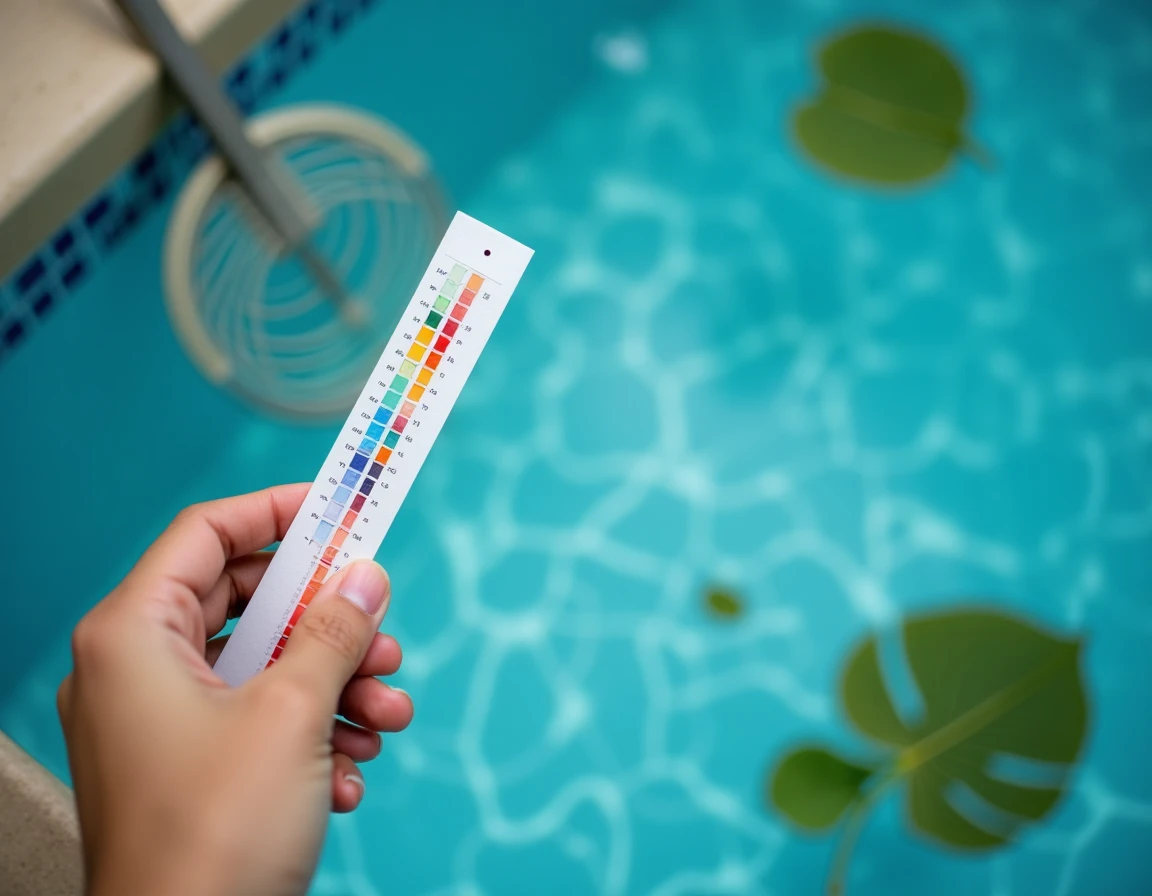
The pH is measured daily with strips or an electronic tester, taking water samples from different locations. If the pH rises, we add pH minus (sodium bisulfate) diluted in a bucket, poured slowly while walking around the pool. This distribution action compensates for the lack of mechanical stirring.
Temperature plays a direct role. The warmer the water, the faster microorganisms multiply and the more chlorine degrades. During heatwaves, feedback varies on this point, but most above-ground pool owners find that after three days without any maintenance in high heat, the water begins to cloud, even with an initial chemical treatment.
Recommended testing frequency without a pump
- Test the pH and free chlorine level every morning before any swimming
- Adjust the pH between 7.0 and 7.4 to maximize chlorine action without automatic stirring
- Add a chlorine supplement as soon as the free level drops below the detectable threshold, without waiting until the next day
Above-ground pools and small basins: cases where a backup pump makes all the difference
For a large volume in-ground pool, completely going without circulation for a week remains a serious challenge. For an above-ground pool or a small self-supporting pool, a simple backup pump costing a few dozen euros can make a difference.
There are small submersible garden pumps, typically intended for watering or draining, that create enough water movement to redistribute chemicals. This is not filtration in the strict sense (no filtering media), but continuous stirring prevents stagnation and dead zones where algae tend to settle first.
For very small inflatable pools, some users on the ForumPiscine forum report having connected their existing above-ground pool pump to a simple filter basket, combined with a chlorine tablet in the improvised skimmer. This solution is not ideal in the long term, but it is sufficient to get through a week without the water turning green.
The common point in all these situations remains daily vigilance. Without filtration, you cannot set it and forget it. Each day without maintenance brings the water closer to the tipping point where recovery becomes lengthy, costly, and sometimes more complicated than a simple partial drain followed by a new refill.