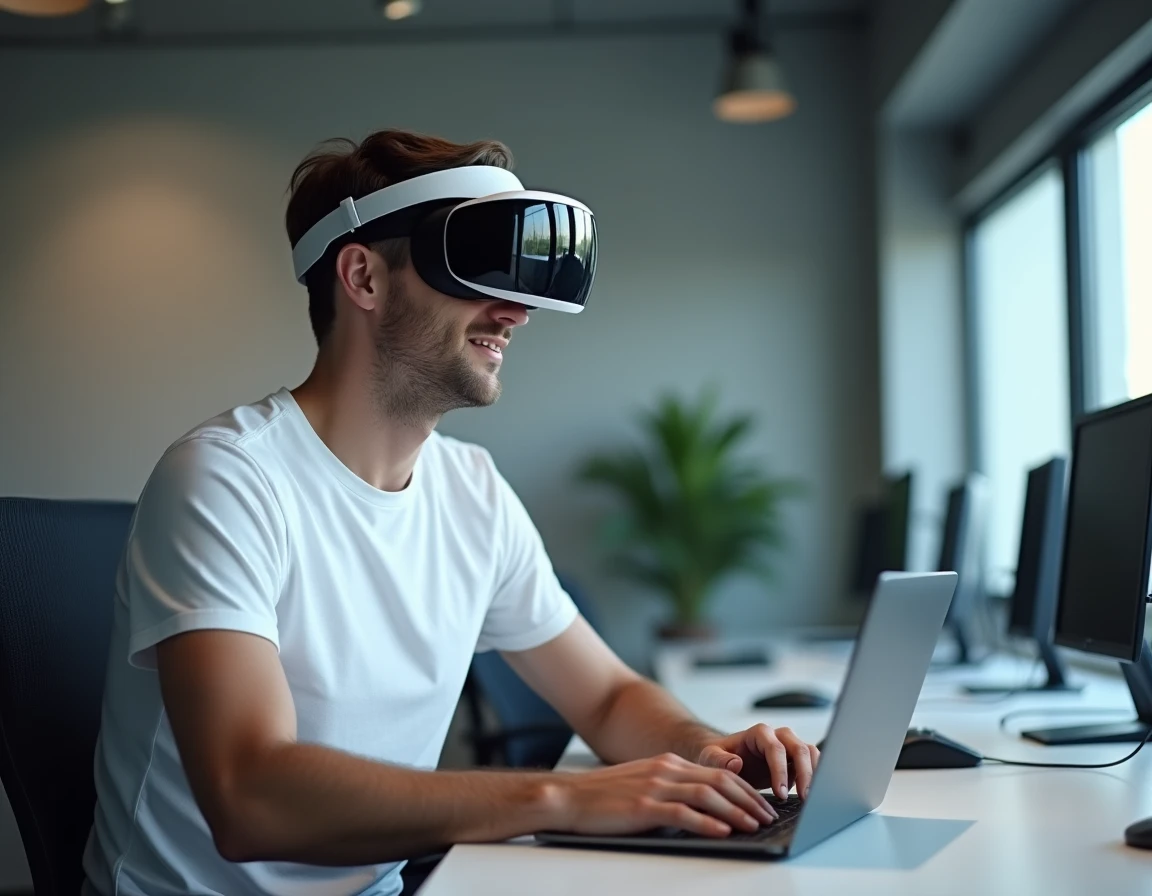
Your phone charges with the same cable as your headphones, game controller, and e-reader. Two years ago, this scenario was still a distant dream. Today, hardware convergence is accelerating at a pace that even manufacturers had not anticipated. The high-tech trends of 2025-2026 are not just about spectacular gadgets: they are reshaping how our devices communicate with each other, protect themselves, and display images.
Universal USB-C: the end of the cable drawer

Have you ever opened a drawer full of different cables without knowing which one goes with what? This problem is disappearing faster than expected. Following the European mandate to adopt USB-C for smartphones, tablets, and cameras (effective in 2024), manufacturers have not stopped at the bare minimum required.
Brands are now extending USB-C to ranges not covered by the European text: mice, keyboards, headphones, gaming accessories. The goal is simple: eliminate regional variants and simplify product lines on a global scale. Asian manufacturers are aligning their “world” models with this unique standard, leading to a gradual disappearance of micro-USB in entry-level mobile devices and connected objects.
Tech enthusiasts who follow these developments daily on geekwise.fr have noticed: even budget accessories are abandoning micro-USB. This shift has concrete consequences for the choice of a peripheral.
- One charger is enough to power a laptop, a phone, and wireless earbuds, reducing clutter while traveling
- Data transfer speeds improve with each iteration of the standard, rendering older connectors technically obsolete
- The second-hand market loses value for devices still equipped with micro-USB, as buyers prefer USB-C compatibility
Automatic security updates on everyday connected devices
For a long time, only PCs and smartphones received regular security patches. Your smart TV, Wi-Fi router, or smart speaker remained stuck in time, vulnerable to flaws discovered after their purchase.
This operation is changing. Automatic background updates (known as OTA, or “over the air”) are now reaching televisions, internet boxes, consoles, and some smart home devices. The user no longer has to do anything: the firmware updates itself, often at night, without any visible reboot.
Two forces are driving this trend. On one hand, European regulations on the cybersecurity of digital products are starting to take effect. On the other hand, manufacturers of processors and embedded systems are imposing standardized update mechanisms on their partners. The result is a layer of protection that now covers the entire connected home, not just the phone in your pocket.
What this changes for a tech user
Previously, setting up a secure home network required manually checking each device. Now, the mental load decreases. A recent router fixes its own vulnerabilities without intervention.
However, caution is still needed: not all manufacturers offer the same duration of software support. Checking the update policy before purchase becomes a selection criterion as relevant as the technical specifications.
HDR10+ Advanced and TV image quality
Are you watching a dark scene in a series and barely distinguishing the details? The HDR (High Dynamic Range) standard has been trying to solve this problem for several years. The next step is called HDR10+ Advanced.
Announced by Samsung, this new standard pushes image processing further than the classic HDR10+. The idea is to adapt brightness and contrast on a frame-by-frame basis, but with greater granularity. The first compatible televisions are hitting the market.
Why this interests tech enthusiasts
HDR10+ Advanced is not just a marketing gimmick. It comes at a time when OLED and mini-LED panels are reaching very high brightness levels. Without suitable metadata, this luminous power is poorly utilized. The new standard allows content creators to precisely control the rendering on each compatible screen.
To take advantage of it, the entire chain must be compatible: the television, the video source (player, box, streaming app), and the content itself. The first films and series encoded in this format are starting to appear, but the library remains limited for now.
Tech innovations in France: robots and artificial intelligence serving the concrete
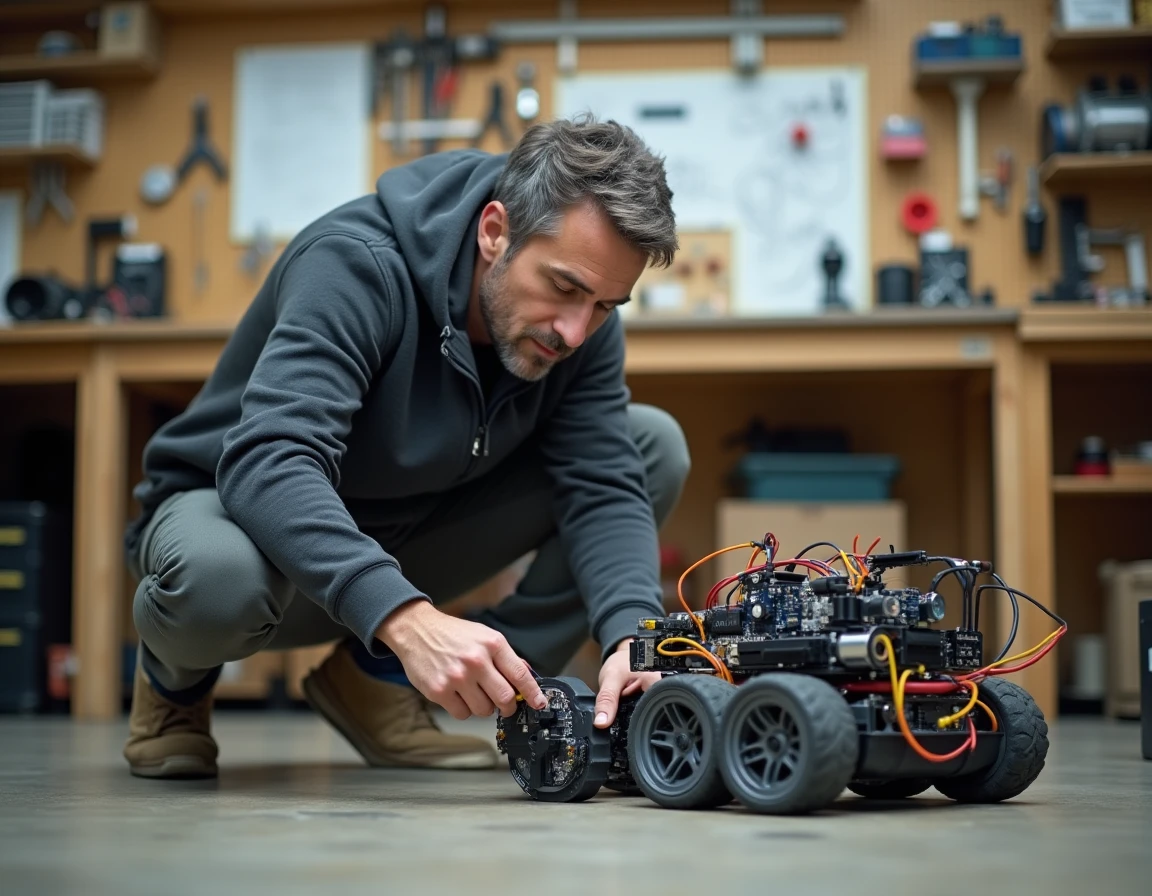
Tech shows held in France show a clear direction: artificial intelligence is coming out of screens to enter the physical world. Multifunctional robots are gaining dexterity. They are no longer confined to industrial assembly lines.
They can be found in logistics, precision agriculture, and even restaurants. Their common point: they combine sensors, real-time data processing, and learning to adapt to various tasks without complete reprogramming.
On the software side, AI agents (programs capable of making decisions autonomously within a defined scope) are being deployed in inventory management, customer support, and document analysis. Their distinction from a classic chatbot: they can perform multiple actions without human intervention between each step.
- In logistics, an AI agent can automatically adjust supplier orders based on sales forecasts
- In cybersecurity, these agents detect and isolate a threat faster than a human team alone
- In agriculture, robots equipped with computer vision identify sick plants and adjust treatment plot by plot
The landscape of technological innovations in France is characterized by this desire to anchor artificial intelligence in tangible uses, far from purely conceptual demonstrations. The convergence of widespread USB-C, automated security for connected devices, and next-generation image processing is shaping a digital ecosystem where each device gains autonomy, compatibility, and reliability, without the user needing to become an expert to benefit from it.