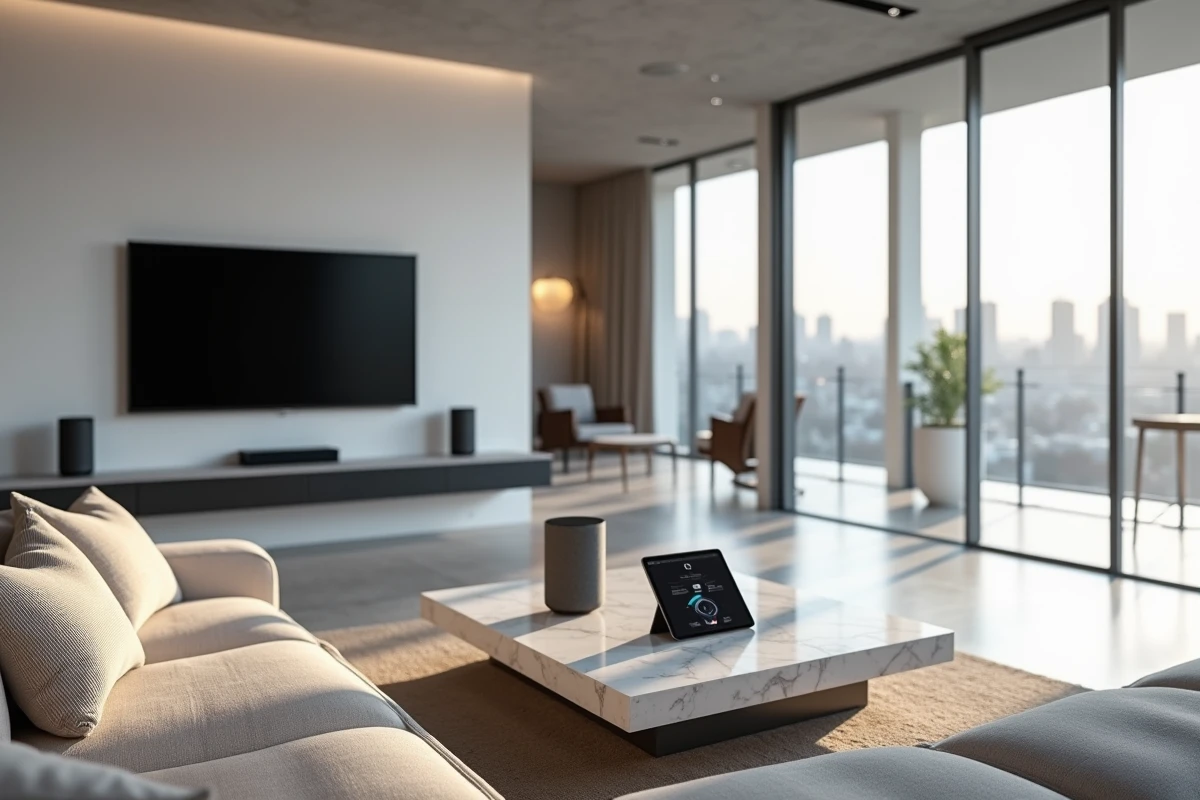
Your smart bulb refuses to pair with your voice assistant, even though the box promises installation in two minutes. This kind of frustration remains common, even in 2026. The modern, connected home is advancing quickly on paper, but daily reality requires sorting between real progress and marketing promises. Here are the innovations that are truly changing the game for a functional connected home.
Matter 1.5 and Thread: What the protocols really change in daily life
Have you ever noticed that your connected devices sometimes work very well on their own but refuse to cooperate with each other? The problem often lies in the communication protocol. Historically, each manufacturer used its own language, forcing the need for multiple gateways and applications.
The Matter standard, supported by Apple, Google, Amazon, and Samsung, was supposed to solve this problem. Version 1.5, released at the end of 2025, adds native support for IP cameras, roller shutters, and energy management. In practical terms, controlling security, shading, and consumption tracking from a single multi-brand interface becomes technically possible.
The Thread protocol, on the other hand, operates like a mesh network. Each connected device relays the signal to neighboring devices, improving range and stability without a central hub. Ikea is betting on Matter-over-Thread for its accessible home automation ranges, with sensors and connected plugs at reduced prices. For those who want to learn more about Neo News, the home section closely follows these developments.
The promise remains to be nuanced. Recent tests show that the installation of Matter devices still regularly fails, with pairing and stability issues when switching from one ecosystem to another. The announced simplicity is not yet a reality for a non-technical user.
Smart energy management: controlling consumption without thinking
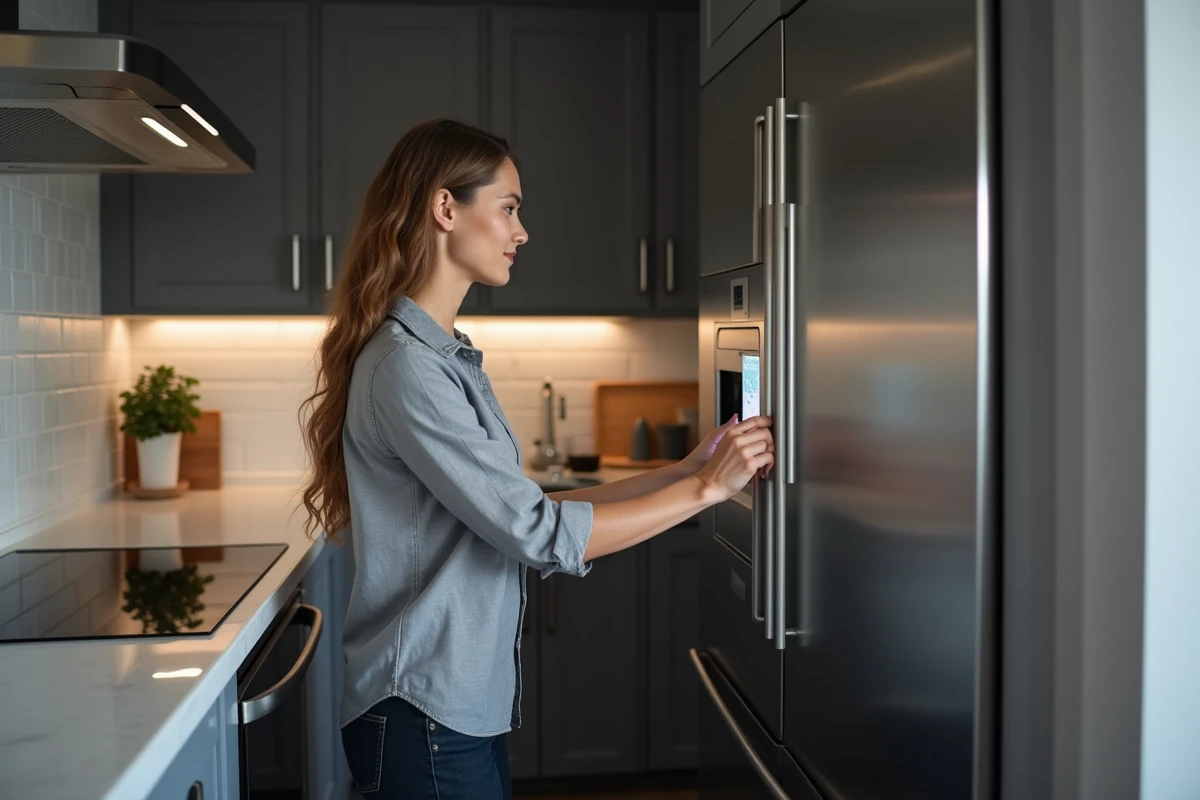
Energy represents the area where home automation brings the most measurable benefit. Current systems go beyond just programmable thermostats.
An intelligent system analyzes several parameters in real-time:
- The local weather and solar forecasts to anticipate the need for heating or cooling in the coming hours
- The occupancy habits of the home, learned automatically, to turn off or reduce heating in empty rooms
- The production of photovoltaic panels, when they exist, to trigger the water heater or charge an electric vehicle when surplus is at its maximum
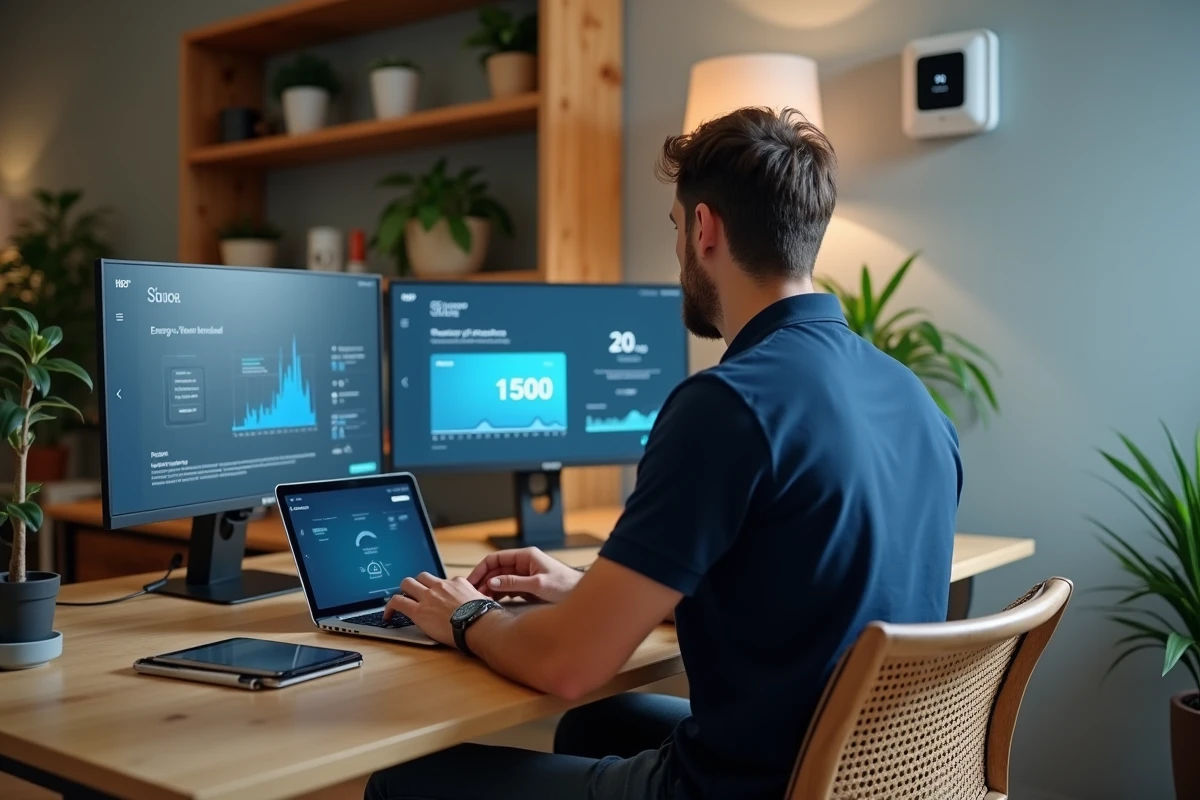
The goal is no longer to program manually but to let the system arbitrate between comfort and savings. Open-source platforms like Home Assistant, whose June 2026 update rethinks the user experience, allow for creating these automations without a monthly subscription.
The actual gain heavily depends on the insulation of the home and the type of heating. In a poorly insulated house, no algorithm compensates for thermal losses. Energy home automation makes sense only after work on the building’s envelope.
Connected security: cameras, sensors, and limits of home surveillance
Home security accounts for an increasing share of connected device sales. IP cameras, opening detectors, and connected locks now form integrated ecosystems.
With Matter 1.5, cameras from different brands can finally communicate within the same dashboard. Before this update, using a Ring camera with a Philips Hue system to trigger deterrent lighting required software hacks. This type of scenario is becoming native.
Motion and opening sensors, on the other hand, are becoming more discreet. Some Thread models attach to a door frame and operate for several years on button batteries, without wires or dedicated gateways. Connected security is approaching a professional installation without the cost of a monitoring subscription.
However, the question of privacy remains. Storing video streams on a remote server exposes to security vulnerabilities and potential data exploitation. Solutions with local storage (NAS, encrypted SD card) limit this risk but require a minimum of technical configuration.
Accessible home automation: why price is no longer a barrier
The image of the connected home reserved for high budgets no longer reflects the reality of the market. Ikea offers motion sensors, connected plugs, and motorized blinds at prices close to their non-connected equivalents.
This positioning relies on Thread, which eliminates the need for an expensive gateway for each family of products. A simple Thread router (often integrated into a connected speaker or a recent TV box) is enough to make the whole system work.
Free software platforms complement this accessibility. Home Assistant, Jeedom, or Domoticz run on a low-cost microcomputer and centralize devices from various brands. The initial investment for functional home automation is limited to a few dozen euros, excluding the devices themselves.
The real hidden cost remains time. Configuring automations, maintaining updates, resolving occasional incompatibilities: the connected home requires a minimum of technical involvement, at least for the installation phase.
Connected habitat and new construction: integrating home automation from the plan
Cabling and network infrastructure
In new construction, installing dedicated conduits for the network (Category 6 Ethernet, internal fiber optic) costs little at the time of the structural work and avoids Wi-Fi limitations in distant rooms. An electrical panel anticipating spaces for home automation modules (like KNX or Zigbee) facilitates future additions without renovation.
System scalability
Choosing an open protocol from the design stage protects against the obsolescence of a single manufacturer. If your thermostat supplier disappears, a Matter or Zigbee device can be replaced by a compatible competitor. The flexibility of the protocol matters more than the brand of the device.
A common mistake is to wire the entire house for a closed proprietary system, which works well initially but becomes a constraint as soon as a component is no longer manufactured. It’s better to have a neutral network on which interchangeable devices can be added.
The connected home in 2026 is progressing on two simultaneous fronts: interoperability between brands (still imperfect) and lower entry costs. The Matter protocol and Thread network lay solid foundations, but daily reliability still depends on the care taken in the initial configuration and the choice of open standards rather than locked solutions.