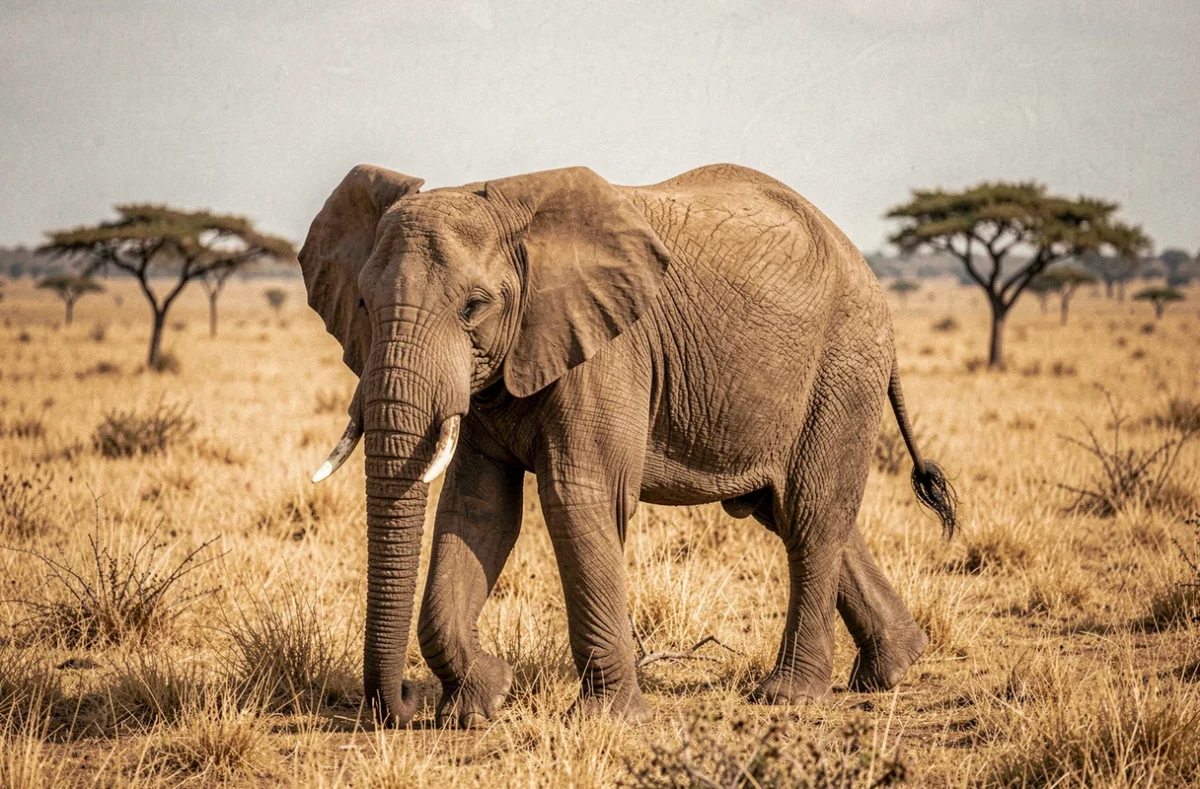
Observing a bird of prey in a hover, identifying an amphibian in a pond, or understanding why some fish change sex during their lives: wildlife holds mechanisms that even textbooks barely summarize. Online platforms dedicated to animals now allow access to this knowledge without a biology degree, as long as you know where to look and how to sort the information.
Naturalist Data in France: Monitoring that Goes Beyond a Simple Catalog
Have you ever consulted a species profile on an animal website while wondering where the information came from? Behind every distribution map or conservation status, there are data collection networks operating at regional and national levels.
The Sigogne platform in Bourgogne-Franche-Comté exemplifies this mechanism well. It has surpassed the threshold of 15 million observation data covering 17,227 species. These are not theoretical estimates: each data point corresponds to a geolocated observation, dated, often verified by a network of volunteer and professional naturalists.
This type of database serves as a foundation for public platforms. When a site indicates that a species of bat is present in your department, the information generally comes from these regional observatories. Understanding this chain helps assess the reliability of what you read.
To explore wildlife through thematic profiles (wild species, pets, marine biodiversity), the site animaltime.net organizes its content into categories accessible without prior knowledge.
Conservation Status of Species: Why the Numbers Are Declining

One observation deserves to be stated clearly: the proportion of species in a favorable state has decreased from 26% to 22% between the periods 2013-2018 and 2019-2024, according to Vie-publique. The degradation particularly affects habitats, not just species taken in isolation.
Why this decline when information platforms about wildlife have never been more numerous? Because knowing a species and protecting its habitat are two distinct actions. A site can inform you that the European mink is critically endangered, but the causes of its decline (destruction of wetlands, road collisions, competition with the American mink) fall under territorial policies.
Animal platforms play a role in raising awareness. They do not replace restoration plans, but they create an informed public capable of understanding the stakes when a development decision concerns a natural area close to home.
European Regulation on Nature Restoration: What Changes Concretely
The regulation (EU) 2024/1991 on nature restoration has entered its implementation phase. Member States were required to submit their national plan projects to the European Commission by September 1, 2026. This tight schedule has a direct consequence on how animal data is collected and used.
Before this regulation, regional platforms primarily served to document the presence or absence of species. Now, they are becoming operational monitoring tools. An observatory like FAUNA in Nouvelle-Aquitaine, with over 17,000 recorded species and nearly 555 contributors, directly feeds the indicators that France must report to Brussels.
For the public, this means that the data accessed on animal platforms is becoming more precise and frequently updated. Species profiles are gradually incorporating updated conservation statuses aligned with official assessments.
What the Regulation Implies for Online Content
Websites dedicated to wildlife that rely on verified sources (red lists, regional observatories, ministerial reports) gain relevance. Those that compile information without dating or sourcing it become obsolete more quickly, as conservation statuses evolve with each evaluation cycle.
- Check the update date of species profiles: a profile not updated in three years may display an outdated conservation status.
- Prefer platforms that cite their sources (regional observatories, IUCN, national reports) rather than those that only provide generic descriptions.
- Cross-check information with institutional portals like Faune-France or regional biodiversity observatories to confirm a status.
How to Use an Animal Platform Effectively: Sorting Criteria

Not all wildlife platforms are created equal. The quality of an animal website is measured by the traceability of its data, not by the number of published profiles. A site with 500 sourced profiles is worth more than a catalog of 5,000 entries copied from general encyclopedias.
Here are the points to check before considering content reliable:
- Does the profile mention a specific conservation status (vulnerable, endangered, of minor concern) with a reference?
- Are the behavioral information (feeding, reproduction, habitat) accompanied by a geographical context, or do they remain vague?
- Does the site clearly distinguish wild species from domestic animals in its navigation, avoiding confusion between needs and regulations?
- Are video or photographic contents captioned with the location and date of capture, or are they merely decorative illustrations?
These criteria may seem simple, but they eliminate a large number of sites that recycle content without added value.
The proliferation of animal platforms reflects a genuine public interest in biodiversity. This interest produces concrete effects only when it is based on reliable and updated data.
With the implementation of the European regulation on nature restoration, the information available online will gain in rigor. It remains for each reader to develop the habit of verifying their sources, even when the subject seems as accessible as a profile on the red fox or the kingfisher.